
Monday, March 2, 2009

LANDMINE AFFECTED ANIMALS AND THE MINE TREATY


Monday, March 2, 2009 Direct Link: http://www.mercopress.com/vernoticia.do?id=16265&formato=html
Registered User Log-In
E-Mail:

Password:


UN praises landmines milestone treaty, but “much work remains”
United Nations Secretary-General Ban Ki-moon has commended the tireless efforts undertaken over the past decade to rid the world of anti-personnel landmines, while stressing that much work remains to eliminate this global scourge.


Zoom
A statement issued by Mr. Ban's spokesperson on the occasion of the tenth anniversary of the entry into force of the Anti-Personnel Mine Ban Convention (1 March), notes that the treaty's achievements are "quantifiable and many." Last year over 200,000 landmines were cleared around the world, according to the UN Mine Action Team. In Afghanistan, over 81,000 anti-personnel mines were removed during 2008 by over 8,000 national staff. Meanwhile, to date in Sudan, collective efforts have opened over 29,000 kilometres of road thereby increasing freedom of movement, reclaiming productive land and reviving trade. "However, there are still formidable challenges: landmines continue to kill and injure every year, they hinder social and economic development, and represent a serious obstacle for humanitarian operations throughout the world," the statement says. Since the Convention's inception, 156 countries have become States Parties to the treaty, thereby committing themselves to prevent future suffering from anti-personnel mines, and also to resolve the existing landmine problem. Mr. Ban strongly urges all States that have not yet done so to accede, as soon as possible, to the treaty, also known as the Ottawa Convention. "This Convention exists because people and Governments across the globe agreed that anti-personnel landmines have no place in our world," according to the statement. "On this anniversary, let us recommit ourselves to the task of eliminating anti-personnel landmines, assisting survivors and building a more prosperous and peaceful world." The Secretary-General also commended the dedicated efforts that States Parties to the treaty and mine action practitioners are pursuing to achieve the goal of a world free of anti-personnel landmines, including the tireless work of the UN, regional organizations, non-governmental organizations (NGOs) and the International Committee of the Red Cross.Altogether, more than 50 countries have received various UN support in mine action. Coordinating this vital assistance for more than a decade has been the UN Mine Action Team, comprising 14 UN departments, programmes, funds and agencies.

These pages provide the text and updates on universalization and implementation of the 1997 Mine Ban Treaty.
The Mine Ban Treaty is the international agreement that bans antipersonnel landmines. Sometimes referred to as the Ottawa Convention, its official title is: the 1997 Convention on the Prohibition of the Use, Stockpiling, Production and Transfer or Anti-Personnel Mines and on Their Destruction.
The treaty is the most comprehensive international instrument for ridding the world of the scourge of antipersonnel mines. It deals with everything from mine use, production and trade, to victim assistance, mine clearance and stockpile destruction.
In December 1997 a total of 122 governments signed the treaty in Ottawa, Canada. In September the following year, Burkina Faso became the 40th country to ratify the agreement, triggering entry into force six months later. Thus, in March 1999 the treaty became binding under international law, and did so more quickly than any treaty of its kind in history. Today, the treaty is still open for ratification by signatories and for accession by those that did not sign before March 1999.




INDIA AND THE LAND MINES


INDIA/NEPAL: ICBL delegation to India and Nepal

The Indian Campaign to Ban Landmines and guests celebrating the 10th Anniversary of the Mine Ban Treaty in New Delhi. Photo: Mine Action Canada.

On 27 September the Indian CBL organized a conference to mark 10 years of the Mine Ban Treaty, with the participation of ICBL Executive Director Sylvie Brigot, Justice JS Verma, Former Chief Justice of India and Chairman of the National Human Rights Commission, the Canadian High Commissioner, representatives from the Indian government, UN agencies and the ICRC, as well as landmine survivors. Other activities included a photo exhibition, a talk at the Institute of Peace and Conflict Studies, and official meetings with the Ministries of External Affairs and Defense. India is not a StateParty to the treaty but the participationof senior government representatives in the anniversary events, presenting their views on the mine ban for the first time in a public forum in India, reflects increasing openness and flexibility on this issue and should hopefully result in a freer and more forthcoming dialogue. In Nepal, ICBL delegates received assurances from both government representatives and the Maoists that they were willing to ban antipersonnel landminesand collaborate to ensure the success of humanitarian mine clearance which is about to start in the country following the peace agreement. During the three-day mission, the delegation met with the Hon. Speaker of the Parliament, leaders of various political parties, including CPN/ Maoists, senior officers of the Nepal Army as well as members of the National Mine Action Steering and Technical Committees – all of whom expressed a strong commitment to ban antipersonnel landmines and join the Mine Ban Treaty. On 3 October, a National Conference on ‘Human Security and Landmines – Problems & Challenges’, organized by the Nepal CBL was inaugurated by Hon. Ram Chandra Yadav, State Minister for General Administration, and was attended by diplomats, members of international organizations, government and army officials, scholars, civil society as well as landmine survivors.

BAN LANDMINES

LANDMINES IN DESERT


HOPE AND REHABLILITAION FOR LAND MINE VICTIMS ...


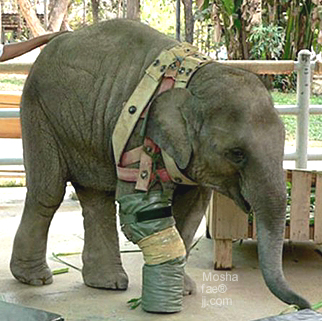
JAIPUR FOOT. DONATE A FOOT/LIMB.


FOR MORE DETAILS VISIT :
BLINDED EXSERVICE MEN KAKASINGH

Blinded ex-serviceman awaits benefits Chandigarh, April 4Over 40 years after he was blinded in a blast while laying mines along the Indo-Pak border, a 75-year-old ex-serviceman, Kaka Singh, is still awaiting his promised benefits. As the world observes the International Day for Mine Awareness and Assistance in Mine Action today, a large number of landmine victims in India and abroad seem to be living a forgotten existence.
Kaka Singh along with his six-year-old grandson Sandeep at his home in Zirakpur, near Chandigarh, on Tuesday. — Tribune photo by Manoj Mahajan


What would you do if you had to worry about landmines every time you went to the store, took a drive in the countryside or went to see your doctor?
What would you do your family member who went out of the house might never come back or loose his limbs on the way to work because a land mine exploded....
what would you do if your kids lost their limbs or died while playing or riding a bike because ox explosion...
there are millions of people who go through this and dont know what to do either so join communities and support to ban land mines. and give this people a better life and better place to live...
Support No More Landmines

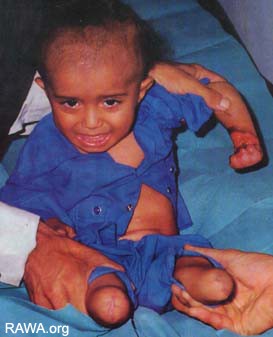
Landmines kill and injure innocent civilians around the world every day. One third of those are children.
There are many ways that you can help raise funds, raise awareness and save lives and limbs:
Take part in an event such as a triathlon, marathon or 10k run.
Recycle used toner cartridges and old mobile phones.
Make a monthly donation.
Buy a gift voucher for a friend or relative to celebrate a birthday, wedding or holiday.
Have a fundraising lunch or dinner party.
Get sponsored to do something unusual or challenging.
Order a teacher’s resource pack to educate students about the global landmine crisis.
Write to David Milliband or your local MP to call for a ban on cluster bombs.
Any of these things will make a profound difference to communities around the world who have to live every day with the threat of landmines.
Thank you!

CAMPAIGN.


http://video.google.com/videoplay?docid=8881747522135669291
The International Campaign to Ban Landmines is a coalition of non-governmental organizations whose goal is to abolish the production and use of anti-personnel mines.
The coalition was formed in 1992 when six groups with similar interests, including
Human Rights Watch, medico international, Handicap International, Physicians for Human Rights, Vietnam Veterans of America Foundation and the Mines Advisory Group, agreed to cooperate on their common goal. The campaign has since grown and spread to become a network of over 1,400 groups – including groups working on women, children, veterans, religious groups, the environment, human rights, arms control, peace and development -- in over 90 countries, working locally, nationally and internationally to eradicate antipersonnel landmines. A prominent supporter was Diana, Princess of Wales.
The organization and its chief spokesperson,
Jody Williams, jointly received the 1997 Nobel Peace Prize for their efforts.

There are 13 countries that continue to produce antipersonnel landmines: Myanmar, China, Cuba, India, Iran, North Korea, South Korea, Nepal, Pakistan, Russia, Singapore, United States, and Vietnam. Since the mid-1990s there has been a de facto ban on the transfer or export of antipersonnel mines. There have been no documented state-to-state transfers since then. It is believed that the trade of antipersonnel mines has dwindled to a very low level of illicit trafficking and unacknowledged trade.
The ­One of the most deadly legacies of the 20th century is the use of landmines in warfare. Anti-personnel landmines continue to have tragic, unintended consequences years after a battle and even the entire war has ended. As time passes, the location of landmines is often forgotten, even by those who planted them. These mines continue to be functional for many decades, causing further damage, injury and death.
Landmines are basically explosive devices that are designed to explode when triggered by pressure or a tripwire. These devices are typically found on or just below the surface of the ground. The purpose of mines when used by armed forces is to disable any person or vehicle that comes into contact with it by an explosion or fragments released at high speeds.


Currently, there are more than 100-million landmines located in 70 countries around the world, according to OneWorld International. Since 1975, landmines have killed or maimed more than 1-million people, which has led to a worldwide effort to ban further landmine use and clear away existing landmines.

Fight against landmines is a fight for the rights of people to live free from fear, in a safe environment conducive to development and peace.
Mines kill or injure thousands of people every year. And they rob whole communities of their livelihoods. In many countries, mines block people’s access to roads, schools, health care, water supplies, jobs, and opportunities to get ahead.
United Nations Mine Action Team
Under the overall coordination of the UN Mine Action Team, 13 separate UN agencies, programmes, departments and funds provide various “mine-action” services in 41 countries or territories.
Mine action is about more than just removing landmines from the ground, or “demining.” It includes a range of activities aimed at protecting people from danger, helping victims become self-sufficient and active members of their communities, advocating for a world free from the threat of landmines, and helping countries destroy stockpiled landmines, to ensure they may never be used by anyone.
Although the United Nations helps numerous countries face their landmine problems, the organization also helps address the larger problem of “explosive remnants of war,” which includes everything from cluster bombs that failed to detonate on impact but nevertheless remain volatile, to abandoned grenades, mortars and bombs that sometimes kill more people than antipersonnel mines.
The United Nations’ work also extends beyond antipersonnel mines, helping remove antitank and antivehicle mines, which may also kill or injure civilians.

A FOOT SHAPED MIRACLE:
From 1968 to 1975, only 59 patients were outfitted with the Jaipur foot, but the use of the new limb spread outside India during the Afghan war in which Russian land mines caused thousands of injuries. The International Committee of the Red Cross discovered that the Jaipur foot was the hardiest for the mountainous Afghan terrain, and distributed it there.Thereafter the Jaipur foot became a popular choice in countries with landmine amputees, such as Vietnam and Cambodia, among others. The Time article quotes Dr Sethi as saying: “Western aid agencies have helped millions of amputees, and they’ve found that they can’t do it as cheaply as with the Jaipur foot.”Ram Chandra now works with the Delhi-based Bhagwan Mahaveer Viklang Sahayata Samiti (BMVSS), a non-profit organisation that provides artificial limbs free of cost to the disabled and also works to rehabilitate them in society. The Samiti organises mobile camps where people are fitted not only with artificial limbs but also with polio callipers. According to the BMVSS website, on an average 15,000 people are fitted with the Jaipur foot and 35,000 with other aids every year. Last year, BMVSS donated a thousand limbs to be fitted to war amputees in Afghanistan. Millions could have been made off the Jaipur foot if its founders had stuck to their intellectual property rights and patented their creation. But that would have ratcheted up the cost substantially and put the foot out of reach of those who needed it the most.As a publisher’s note in the January 2002 issue of US-based technology magazine Siliconeer acknowledged: “Where a Western prosthesis can cost several thousand dollars, the Jaipur foot costs less than $30. Sethi and Chandra could have minted money with this device, but their humanitarian impulse triumphed. In a world where patent rights rule supreme and intellectual property rights can be cause for war, it’s particularly striking that an innovation that has changed the lives of millions of amputees was never patented.”Today, the Jaipur foot is emblematic not only of a fruitful interface between technology and human need, but also gives us in its own way reason to hope. This is reflected in what Ram Chandra, still the simple artisan, pointing out a girl who had lost her leg in an accident, told Time: “People said I would be a rich man if we had patented the Jaipur foot, but it’s enough satisfaction for me to see the joy on that girl’s face when she walks again.” The Jaipur foot continues its journey on that hope. w Contact: Bhagwan Mahaveer Viklang Sahayata Samiti, email: bmvss@jaipurfoot.com; website: www.jaipurfoot.com